
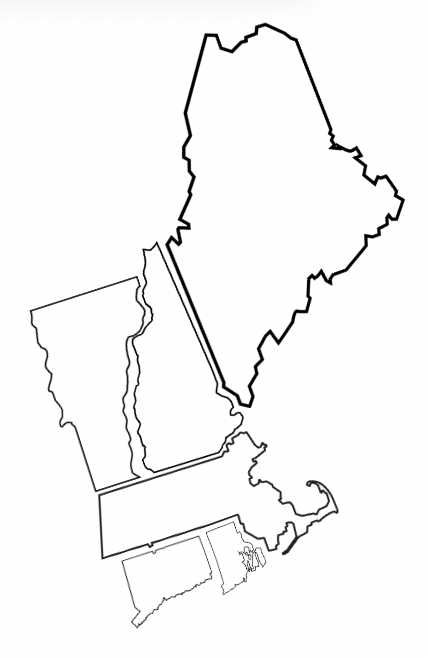
We have over 600 ANHE members in Connecticut, Maine, Massachusetts, New Hampshire, Rhode Island, and Vermont! Let’s join together to protect the right to a healthy climate for all people in New England. We host events, share information about what’s going on, and create opportunities for nurses to talk to their legislators and each other about all things environmental health.
What We’re Working On
Stay Strong on Massachusetts’ Global Warming Solutions Act
As winter gas price spikes approach, on top of the region’s already sky-high electricity prices, residents are struggling to pay their energy bills. Approving rate hikes that only serve to keep us locked onto price-volatile, outdated fuels isn’t the way to go. Neither is staying dependent on electricity generated by imported gas. Remind the state’s Joint Committee on Telecommunications, Utilities, and Energy that we need to implement our state’s law to bring more clean energy online, so that we can slash bills and stabilize energy prices for decades to come.

Support Sanctuary Status for Cashes Ledge
Cashes Ledge, an extraordinary undersea mountain range in the Gulf of Maine, is home to a thriving diversity of habitats and marine life. Future generations deserve to have this unique treasure and all the vulnerable marine life that it supports protected forever. That’s why we nominated the Cashes Ledge Area to become a national marine sanctuary. Sanctuary status will protect Cashes Ledge from damaging human activities and build resilience to climate change in the Gulf of Maine’s warming waters. For our nomination to be successful, we need to prove that New Englanders like you support keeping the Cashes Ledge Area a wildlife haven in the Gulf of Maine.

Tell Governor Ayotte: Lead on Climate Safety
It is more important than ever for states to act on climate change. States—and their governors—can be powerful leaders in building a clean energy economy. That’s why we’re asking Governor Ayotte to step up to slash climate pollution, protect children’s health, and ensure environmental justice. Our future depends on it.
Clean Air in the Northeast
Join us on September 25th and 26th, 2025 in Cambridge, MA for the two-day, in-person Clean Air Northeast 2025 Partners Meeting at the Volpe National Transportation Systems Center! Engage with emissions reductions experts, community leaders, and government and non-profit representatives from across the northeast to discuss key topics around cleaning our air.

Meet Your New England Regional Organizer!
Jessica Ochs, DNP, APRN, FNP-BC, CNE, ELCS, CPAHA, FNAP (she, her)
Jessica Ochs is a distinguished nursing leader and educator at Endicott College’s Cummings School of Nursing and Health Sciences. As a Professor of Nursing, she focuses on health equity, social justice, advocacy, and policy, emphasizing how social and structural determinants of health influence population well-being.
Her teaching and scholarship explore critical topics like health disparities, structural discrimination, and the impact of socioeconomic status on health, highlighting the interconnectedness of social structures, health outcomes, and community well-being. She also specializes in interprofessional collaborative practice and education and creating inclusive learning environments. Her research has been presented at numerous national conferences and published in several peer-reviewed journals. She is a senior contributing author for the open education resource e-book Population Health Nursing.
In addition to her academic work, Dr. Ochs is an Advanced Practice Registered Nurse with over twenty years of clinical experience. She is dedicated to improving patient and community health through education and interprofessional practice in primary care, urgent care, and community care settings. As a Distinguished Scholar Fellow in the National Academies of Practice, she actively serves on the public policy committee, promoting interprofessional collaborative practice and education.
Contact Jessica at jochs@endicott.edu.
Highlights
CT, RI Seek Federal Court Injunction to Resume Work on Halted Revolution Wind Project
Connecticut and Rhode Island are seeking a preliminary injunction to resume work on Revolution Wind, an offshore wind project that was abruptly halted by the Trump administration last month. The Wednesday filing says the stop-work order caused “irreparable harm” to the states by “undermining their sovereign interests in procuring renewable energy.” It seeks to allow construction on the project to resume while the case proceeds in court. Read more here and here.
MA: Environmental Health Webinar Opportunities!
Massachusetts General Hospital’s Center for the Environment and Health has several webinars posted
on issues related to climate change. Learn more here.
FREE, SELF-PACES COURSE: Human Health Effects of Climate Change
The New England Public Health Training Center is offering a free, self-paced course, Human Health
Effects of Climate Change. This course reviews current and expected human health impacts, with
particular emphasis on impacts in Vermont and the northeast. These include heat-related illness, water-related impacts, vector borne diseases, air quality impacts, and mental health and well-being. Because
climate change affects some people more than others, populations of concern and measures of
vulnerability are addressed. The course culminates with examples of strategies used in Vermont and
nationally to reduce climate change impacts on health and to improve health through climate change
mitigation actions. Learners can select Level 1 for an overview or Level 2 for a deeper exploration of the five types of health impacts. Learn more here.
RI: Volunteer Positions Open with the Nature Conservancy
The Nature Conservancy has two open volunteer positions in various locations across Rhode Island. The first volunteer position is as a Rhode Island Preserve Monitor.
Volunteering can be as easy as taking a walk in the woods!
TNC is recruiting individuals and family groups to visit a preserve once a month and report back on
current maintenance issues. Volunteers should be comfortable walking the trails on their own or in a
small group, and we ask that folks make a six-month commitment to the program. Examples of things to look for include trees blocking the trail, missing or faded signs, vandalism or dumping. You can report your findings using a simple online form. Your feedback will help TNC’s preserve managers address any issues quickly and make sure our preserves offer an outstanding trail experience for everyone.
Preserves in need of monitors:
Tillinghast Pond Management Area
Carter Preserve
Moshassuck River Preserve
Whitehead Preserve
The second volunteer position is as a Rhode Island Volunteer Photographer.
Do you enjoy taking photographs or short videos outside? The Nature Conservancy invites you to join a community of volunteer photographers who share their talents to help capture our nature preserves
and habitat restoration projects, and the people we serve. Some volunteers prefer to go out on their own and shoot landscapes, wildflowers, birds or anything else that catches their eye. Other times, we might ask a photographer to cover a specific place or event, such as a trail construction day, especially if you like to take photos of people. TNC shares many donated images through social media, this website, and print materials. There are many ways to help nature through your creativity!
PFAS in Massachusetts
On May 13, 2025, EPA announced changes to the National Primary Drinking Water Regulations (NPDWR) and the Maximum Contaminant Levels (MCLs) for PFAS. EPA announced it will keep the MCLs of 4 parts per trillion (ppt) for PFOA and PFOS that were established in April 2024; however, EPA intends to rescind the regulations for PFHxS, PFNA, HFPO-DA (commonly known as GenX), and the Hazard Index mixture of these three compounds plus PFBS. EPA will provide additional time for MCL compliance, including a proposal to extend the compliance date from 2029 to 2031. EPA plans to issue a proposed rule this fall and finalize this rule in the Spring of 2026. Learn about how MassDEP is addressing the presence of per- and polyfluoroalkyl substances (PFAS) in drinking water here.
Source: Commonwealth of Massachusetts (2025). Per- and Polyfluoroalkyl Substances (PFAS) in Drinking Water. mass.gov. https://www.mass.gov/info-details/per-and-polyfluoroalkyl-substances-pfas-in-drinking-water
PFAS in Maine
Researchers in Maine have found elevated levels of a type of forever chemical known as PFOS in freshwater fish at several sites across the state from 2014 to 2020. The Maine CDC is considering a health advisory for fish containing more than 3 to 4 parts per billion of PFOS. PFAS contamination was also found on more than 100 Maine farms. Learn more about Hot Topics: PFAS & “Forever Chemicals” in Maine here. Learn more about how Maine has adopted more stringent standards for PFAS in drinking water here.
Sources:
Cover, S. (2025). Maine adopts more stringent standard for PFAS in drinking water. Spectrum News. https://spectrumlocalnews.com/me/maine/health/2025/07/15/maine-adopts-lower-standard-for-pfas-in-drinking-water–
Overton, P. (2025). PFAS contamination found on more than 100 Maine farms. Portland Press Herald. https://www.pressherald.com/2025/01/15/pfas-contamination-found-on-more-than-100-maine-farms/
University of Maine (2025). Hot Topics: PFAS & “Forever Chemicals” in Maine. University of Maine. https://libguides.library.umaine.edu/pfas/me
PFAS in Rhode Island
Since receiving funding from the National Institute of Environmental Health Sciences (NIEHS) Superfund Research Program (SRP), the University of Rhode Island’s Sources, Transport, Exposure & Effects of PFAS (STEEP) researchers have started to parse out environmental and human health impacts of PFAS. STEEP’s research is key to address the emerging problem of PFAS contaminated sites across the U.S. and elsewhere. STEEP’s Mission is to address the ubiquitous human health threat of PFAS through rigorous interdisciplinary science to redefine dose exposure benchmarks, develop novel detection techniques, and prepare communities to expect long-term solutions for contaminated sites.
Join STEEP for an upcoming webinar series: PFAS on Cape Cod – Connecting Communities with Science for Solutions, which will provide community members, health professionals, and policymakers with up-to-date research, practical solutions, and an opportunity to engage directly with experts. Each one-hour webinar will include presentations and a live Q&A, with recordings available on the STEEP website for those unable to attend. Learn more and Register here.