
“Remember normal?” This is a question that resonates with many, especially those who’ve lost homes or been misplaced due to climate-related extreme weather disasters. The Museum of Unnatural Disasters pop-up exhibit, a project of the Climate Action Campaign in partnership with the Center for American Progress, Climate Power, and Extreme Weather Survivors, shares stories from families across the United States whose homes were ravaged by extreme weather events. The exhibit highlights a common recurring motif as a reason for worsening disasters, and one that environmental health researchers and scientists have been warning people about for years: Climate change is making extreme weather worse, leading to more damaging and costly disasters.
The Museum of Unnatural Disasters opened in Constitution Gardens on the National Mall from June 3rd-10th, 2026. Images on display in the pop-up museum paint a picture that people across the country are all too familiar with: the emotional and deadly toll that extreme weather events have on communities. The exhibit showcases items collected from individuals in communities ravaged by climate-related disasters, many weathered and torn apart, including street signs, asthma inhalers, and clothing pieces. Whether it be fatal flash floods in central Kansas, harrowing hurricanes on the Florida coast, or withering wildfires across California and Northern Michigan, these show the human toll that headlines often miss.

The name of the pop-up exhibit, The Museum of Unnatural Disasters, calls attention to natural disasters and their unnatural causes. As climate change worsens year by year through global warming and extreme weather events, it’s becoming more stark the impact that fossil fuel emissions have on our deteriorating environment. According to the United Nations, fossil fuel emissions account for 68 percent of greenhouse gas emissions and 90 percent of carbon dioxide emissions, directly contributing to a warming planet and worsening extreme weather patterns.
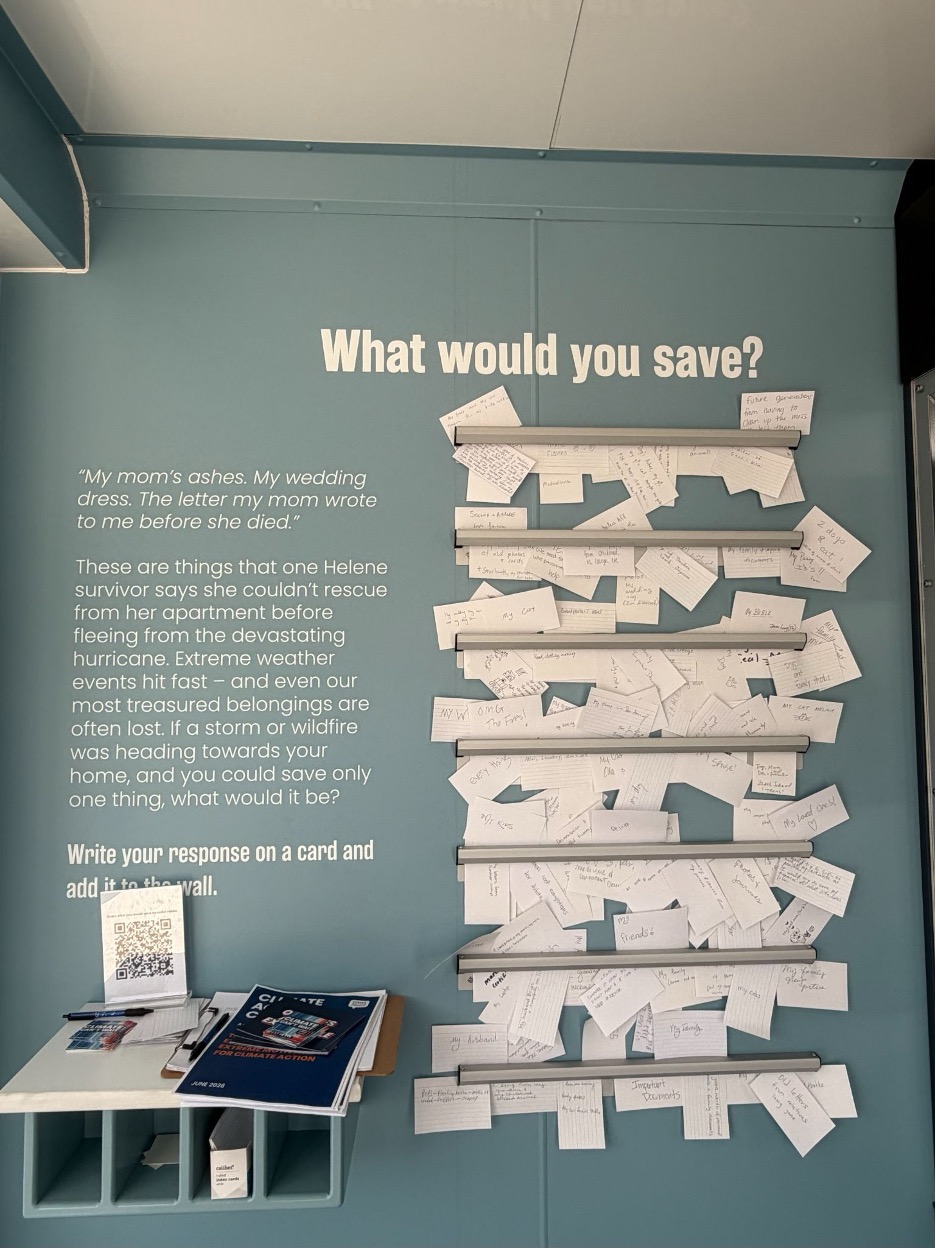
At the end of the exhibit, museum guests were urged to reflect on one thing they would save if a disaster hit their home today. Many responses included pets, family photo albums, or people in the home with them. To have to even reflect on such a tragic question underscores the unfortunate reality of how every region within the United States and the world is at risk.
The Museum of Unnatural Disasters inspired museum guests to take action for a better climate. A main goal of the exhibit was to bring attention to and urge action against practices that actively harm our environment, such as continued burning of fossil fuels for energy. One action that can be taken right now is signing on to a petition to members of Congress, demanding they take urgent action to address climate change. Sign the petition here.
Author: Lauren Baldwin is a junior at the University of Central Florida majoring in Health Sciences, and is an Environmental Health undergraduate intern at ANHE.