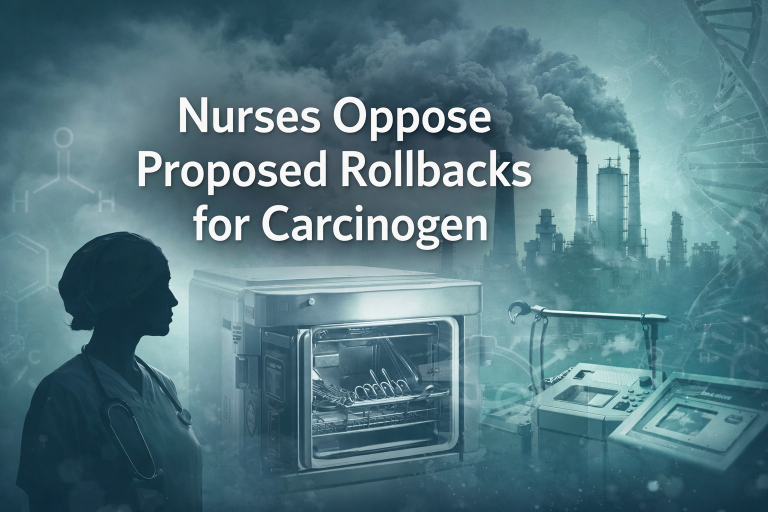
WASHINGTON, D.C. — On March 13th, the Environmental Protection Agency announced that they would be releasing their proposed rule to roll back public health regulations adopted in 2024 for commercial sterilizer facilities that use ethylene oxide (EtO) to sterilize medical equipment and spices.
Ethylene oxide is one of the most toxic air pollutants that EPA regulates. Despite its wide usage, EPA, National Toxicology Program, and International Association of Research on Cancer all classify EtO as a carcinogen. EtO is capable of damaging DNA even in small doses and inhaling it can increase the risk of cancer, including breast cancer and cancer of white blood cells. Nearly 14 million people in the United States, including Puerto Rico, live within five miles of a commercial sterilizer. Many commercial sterilizer facilities are situated in low-income neighborhoods and communities of color, and compound existing health risks from other local sources of pollution. Last June, the Trump administration exempted more than 40% of sterilizers in the U.S. for two years from complying with the 2024 rule.
In response to the proposal, the Alliance of Nurses for Healthy Environments’ Deputy Director Cara Cook, MS, RN, AHN-BC issued the following statement:
“The health sector’s mission is to protect and promote health, however EtO emissions can also contribute to health problems occupationally and in our patients. Part of our professional nursing obligation is to address environmental health exposures that can harm patients, healthcare workers and communities.
Unfortunately, around 50% of medical devices in the U.S. are sterilized with EtO – about 20 billion devices each year. The very product used to sterilize critical medical equipment poses a danger to people who live, work, or attend school near the facilities that emit EtO. Exposure to toxic EtO emissions can worsen respiratory conditions and cause health harms for patients and healthcare workers.
“We shouldn’t have to choose between adequate sterilization and health harming emissions. We want to emphasize the importance of identifying alternatives to safe cleaning and sterilization equipment that doesn’t jeopardize human health and patient care.”
The 2024 safeguards would have eliminated over 90% of EtO emissions from commercial sterilizer facilities, reducing the number of people exposed to unacceptable cancer risks from EtO by 92%.
###
The Alliance of Nurses for Healthy Environments is the only national nursing organization focused solely on the intersection of health and the environment. The mission of the Alliance is to support nurses in promoting planetary health and equity globally by educating and leading the nursing profession, advancing research, incorporating planet-safe practice, and influencing policy.